
No products in the cart.
Discover how two ancient Ayurvedic herbs can help nurture focus, calm and clarity in both children and adults living with ADHD tendencies.
In a world full of constant stimulation, maintaining attention and emotional balance has become a challenge not just for adults but for children too. The modern child’s nervous system is often overloaded by bright screens, busy routines and high expectations leaving many struggling to settle their minds. For parents searching for natural ways to support their child’s concentration and calm, FocusMind offers a gentle, effective alternative.
This unique blend of Bacopa Monnieri and Shankhpushpi is designed to nourish the brain, improve focus and encourage emotional regulation without overstimulation. Both herbs have been revered in Ayurveda for centuries for their ability to enhance memory, intellect and inner peace. Today, modern research supports what ancient healers always knew... a calm mind learns best.

Table Of Contents
1. Introduction to ADHD and Natural Support
ADHD, or Attention-Deficit/Hyperactivity Disorder, affects millions of children and adults across the world. It is not simply about restlessness or distraction but involves how the brain manages attention, motivation and emotional response. For many families, treatment combines modern medicine with lifestyle adjustments and natural supplementation.
Parents increasingly seek gentle alternatives that support focus, emotional stability and healthy brain development without overstimulation. Herbal remedies from Ayurveda, one of the world’s oldest healing systems, offer valuable tools. They aim to nourish the mind and balance the nervous system rather than suppress symptoms.
FocusMind was formulated with this philosophy in mind. By combining Bacopa Monnieri, a herb known for improving cognitive performance and Shankhpushpi, a plant that calms and tones the nervous system, FocusMind helps restore clarity and balance to growing minds.
2.Ayurvedic Understanding of Mental Clarity
In Ayurveda, mental clarity is known as medhya - the quality of intelligence, memory and awareness. Ancient Ayurvedic texts describe certain herbs as medhya rasayana, or rejuvenators for the mind. These plants improve the connection between body, mind and consciousness, allowing information to flow clearly and calmly.
Both Bacopa and Shankhpushpi are classic medhya rasayana herbs. They are used to balance Vata and Pitta doshas, the energies responsible for movement, communication and transformation in the body. When these doshas become imbalanced, a person may experience overthinking, restlessness, poor memory or emotional instability. All symptoms that overlap with modern descriptions of ADHD.
Ayurvedic wisdom teaches that focus arises not from force but from nourishment. By feeding the nervous system with the right herbs and nutrients, attention naturally becomes easier and more sustainable.
3. Meet Bacopa - The Ancient Brain Tonic
Botanical Profile
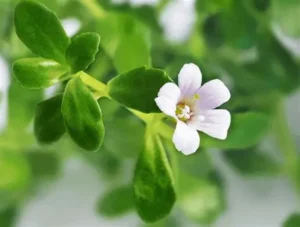
Bacopa Monnieri, also called Brahmi, is a small creeping plant found in warm, marshy areas across India, Sri Lanka, Nepal and parts of Africa and Australia. It thrives near water and can be found in riverbanks, rice paddies and wetlands where it draws nutrients from its mineral-rich environment.
The plant has tiny oval leaves and delicate white flowers, but its strength lies in its chemistry. It contains compounds called bacosides, which are known to enhance communication between neurons and protect brain cells from stress.
Historical Background
Bacopa has been used for over 3,000 years in Ayurvedic medicine. It is mentioned in ancient texts like the Charaka Samhita and Atharva Veda, where it was given to scholars and yogis to improve memory and concentration before study or meditation. In traditional rituals, Brahmi oil was applied to the scalp to calm the mind and encourage restful sleep. This practice is still used in parts of India today.
Known as a “brain tonic,” Bacopa was traditionally used for conditions associated with anxiety, learning difficulties and forgetfulness. Its Sanskrit name Brahmi comes from Brahma, the creator which symbolizes the expansion of consciousness and wisdom.
Modern Research
Modern science now validates Bacopa’s ancient reputation. Studies show that Bacopa can:
- Improve learning rate and memory recall
- Reduce anxiety and nervous energy
- Protect neurons from oxidative damage
- Regulate neurotransmitters like dopamine and serotonin
A 2017 study in the Journal of Ethnopharmacology showed measurable improvements in attention and impulse control among children who took Bacopa extract for several months. Another review published in Frontiers in Pharmacology confirmed that Bacopa enhances working memory, processing speed and overall cognitive performance.
Summary
Bacopa nurtures the mind much like water feeds a growing plant. It strengthens the brain’s ability to process information, store memory and remain calm under stress, making it a valuable ally for children and adults with ADHD tendencies.
4. Meet Shankhpushpi - The Calming Mind Herb
Botanical Profile
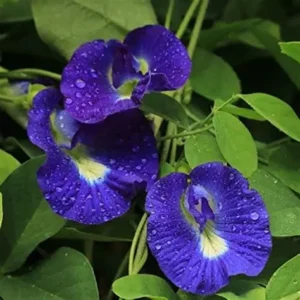
Shankhpushpi (Convolvulus Pluricaulis) is a small flowering herb that grows in the rocky plains of India, particularly in Rajasthan, Punjab and Gujarat. The name comes from the Sanskrit word shankha, meaning “conch shell,” referring to the shape of its delicate blue-white flowers.
Unlike Bacopa, which thrives near water, Shankhpushpi prefers dry, open fields and sandy soil. It is hardy and adaptive, symbolizing its role in stabilizing and grounding the restless mind.
Historical Background
In Ayurveda, Shankhpushpi is regarded as one of the most powerful natural tonics for the nervous system. Ancient physicians described it as a “nectar for the brain” and prescribed it for fatigue, poor memory and emotional disturbance. It was commonly given to students, monks and children to enhance concentration and reduce mental agitation.
Traditional preparations included teas, powders and tonics made with milk and ghee to deliver the herb’s active compounds more effectively. It is often combined with Bacopa in Ayurvedic formulations, a pairing that dates back centuries. Together, they were believed to harmonize intellect (dhi), memory (smriti) and retention (dhriti).
Modern Research
Recent studies confirm that Shankhpushpi acts as a natural nootropic and anxiolytic. Its bioactive compounds which include alkaloids, flavonoids and coumarins, improve the transmission of nerve impulses and increase the brain’s resistance to stress.
Research published in the Indian Journal of Pharmacology found that Shankhpushpi enhances learning ability and memory retention while reducing anxiety and restlessness. It has been shown to modulate acetylcholine levels in the brain. This is a neurotransmitter crucial for focus, learning and recall.
Summary
Shankhpushpi complements Bacopa by soothing emotional turbulence and calming the nervous system. Where Bacopa enhances clarity and cognition, Shankhpushpi restores calm and emotional stability. The result is a balanced state of mind that allows learning and focus to flow naturally.
5. The Synergy of FocusMind
The partnership between Bacopa and Shankhpushpi creates a unique harmony, one that enhances both mental performance and emotional wellbeing. Rather than stimulating the brain like caffeine or synthetic nootropics, FocusMind gently nourishes it.
The combination works on three levels:
- Cognitive Clarity – Bacopa sharpens attention and boosts memory formation.
- Emotional Balance – Shankhpushpi eases anxiety, promoting a sense of calm.
- Neural Protection – Both herbs are rich in antioxidants that protect brain cells from stress and fatigue.
Over time, FocusMind helps retrain the brain to focus without strain, to think clearly without anxiety and to retain information more efficiently. It supports what Ayurveda calls sattva which is a state of harmony, balance and awareness that underpins mental health.
6. Holistic Support for Children with ADHD
ADHD is a complex condition that benefits from a holistic approach that integrates nutrition, movement, sleep and emotional connection. FocusMind works best when paired with healthy daily practices that nurture both brain and body.
Nutrition
Foods rich in omega-3 fatty acids, zinc and magnesium help maintain neurotransmitter balance. Reducing refined sugar, artificial colorants and processed foods can ease hyperactivity and mood swings.
Movement and Play
Regular movement helps release excess energy and improve concentration. Yoga, swimming and outdoor play all support dopamine regulation and focus.
Mindfulness and Routine
Creating predictable routines and teaching mindfulness techniques can help children feel safe and grounded. Even short breathing exercises before homework can reset focus and reduce frustration.
Complementary Support
FocusMind can be combined with FocusMag#1 for improved relaxation or FocusSleep for bedtime calm. Together, these gentle remedies strengthen emotional resilience and cognitive health.
7. How to Use FocusMind Safely and Effectively
For children between 8 and 12 years old, one capsule daily with breakfast is sufficient.
Teenagers and adults may take two capsules daily, one in the morning and one early afternoon.
As with most adaptogenic herbs, consistent use over 6 to 8 weeks brings the best results. FocusMind is not habit-forming and does not overstimulate the nervous system.
It is important to remember that herbal support works gradually. Many families notice improvements in mood and attention within a few weeks, with more pronounced effects after two months of consistent use.
8. Frequently Asked Questions
Can FocusMind replace ADHD medication?
No. FocusMind is a natural supplement designed to support focus and emotional balance. It may complement medical treatment under professional guidance.
Is FocusMind safe for children?
Yes, when used as directed. Both Bacopa and Shatavari have a long history of safe use in children in Ayurvedic practice. Always consult your healthcare provider before combining with medication.
How long before results are noticeable?
Most families report improvements in calmness, attention and sleep within 3–4 weeks with stronger effects after 8–12 weeks of consistent use.
Can adults use FocusMind too?
Absolutely. FocusMind helps adults with brain fog, fatigue or poor concentration just as effectively.
Are there any side effects?
Mild digestive changes (loose stool or slight nausea) can occur at first. Reducing the dose or taking with food helps.
Can I take FocusMind with other Focus products?
Yes, it pairs beautifully with FocusGut, FocusMag and FocusSleep. Avoid overlapping high doses of the same adaptogen.
